Researchers respond to the National Maternity and Neonatal Investigation report
July 07, 2026Academics from the Centre for Maternal and Child Health Research discuss the recent Amos report...

The Centre for Maternal and Child Health Research carries out high quality research to improve the health and care of women, children, families and communities. The Centre provides an environment for the multi-disciplinary development of ideas and research initiatives in collaboration with professional, voluntary and service user organizations. The Centre has direct links with relevant professional educational programmes at City St George's, University of London, such as midwifery, health visiting, public health and child nursing, which enable the rapid transfer of research into education and healthcare practice.
The Centre has four main research groups:
Cross-cutting themes are:
Research group lead: Professor Christine McCourt
Our research focuses on evaluating models of maternity, child and family services and care. Our work aims to improve care through rigorous studies using a range of methodologies with an emphasis on evidence-based care, appropriate uses of technology, service change and development and professional and user experience issues. This theme also has a strong inter-disciplinary thread of applying social science concepts and epidemiological approaches to clinical and organisational issues. Much of our work adopts a critical theory perspective and takes account of the complexity of healthcare interventions and contexts.
Areas of interest within the group include concepts of choice, risk and safety and their relationship with service delivery and change, professionalisation processes and experiences, gender and healthcare and concepts of motherhood, childhood and the family. Our work is funded by a range of sources, including the National Institute for Health Research (NIHR), the European Union and the Medical Research Council.
Our findings have been published in high impact journals and presented at conferences around the world. We have established links with a range of user, professional and policy organisations and university departments at local, national and international levels. Our work has influenced the development of maternity services throughout the United Kingdom (UK) and internationally and has influenced health policy and guidelines in this area.
OPtimal Timing of Induction of labour to improve Maternal and perinatAL outcomes (OPTIMAL): An individual participant data meta-analysis and qualitative evaluation.
Award ID: NIHR206903
OPTIMAL is an NIHR-funded study investigating the optimal timing of labour induction to reduce adverse perinatal outcomes, if there any differential effects by maternal and intervention factors, and to what extent early induction is acceptable. Our Centre leads the qualitative evaluation, exploring the views of service users, healthcare professionals, and key stakeholders on the acceptability induction of labour timing and identifying what information and strategies best support women and birthing people to make an informed choice about induction. Findings will contribute to improving the context in which people decide to offer and undergo an induction of labour, ensuring choices are well-informed and evidence based.
The qualitative evaluation lead and contact is Professor Christine McCourt.
Sono-breech is a diagnostic accuracy study with the primary aim of finding out if midwives can accurately identify which way up a baby is before it is born using a small hand-held ultrasound device. The nested acceptability study, hosted by the Maternal and Child Health Research Centre, has been designed to explore possible barriers and facilitators for implementing this new technology into routine midwifery antenatal care. For more information, visit the Sono-breech website.
Sono-breech is a NIHR Health Technology Assessment project led by Imperial College London and supported by Cardiff's Centre for Trials Research: NIHR152029 - Diagnostic accuracy of handheld ultrasound at 36 weeks of gestation to determine fetal presentation.
Acceptability study lead and contact is Dr Mandie Scamell.
MUSA is a quality improvement programme supporting the continuous improvement of midwifery units in the UK and Europe. It was developed from the Midwifery Unit Standards, in collaboration with international expert stakeholders. MUSA has been implemented England and Wales, as well as in individual units across the UK and Europe. To find out more about MUSA, please visit: https://www.musaframework.org/
MUSA is led by Dr Lucia Rocca-Ihenacho and Dr Cassandra Yuill.
The European Midwifery Unit Accreditation (EMUA) System builds on MUSA Framework by providing a formal accreditation process that assesses MUs against the European Midwifery Unit Standards.
This pilot study explores the feasibility and acceptability of implementing EMUA Level 1 accreditation across six midwifery units in England, Wales, France, and Belgium. Using a co-production approach, and mixed methods pf data collection, the project is working with stakeholders, midwives, and accreditation facilitators to examine how MUSA and EMUA can work synergistically to support continuous quality improvement and recognition of high-quality midwifery-led care.Findings will inform further development of the EMUA System and supporting resources to enable wider implementation across Europe.
EMUA is led by Dr Lucia Rocca-Ihenacho. The team includes: Mrs Hope Jackson, Dr Cassandra Yuill and Dr Marie Lewis.
The Research for Equitable Antenatal Care and Health (REACH) Pregnancy Circles study was the largest randomized controlled trial of group antenatal care undertaken internationally to date, and is the first to take place in the NHS. It aimed to explore whether group antenatal care can improve the outcomes and the wellbeing of mothers and babies.
To find out more about the study, please visit the REACH blog.
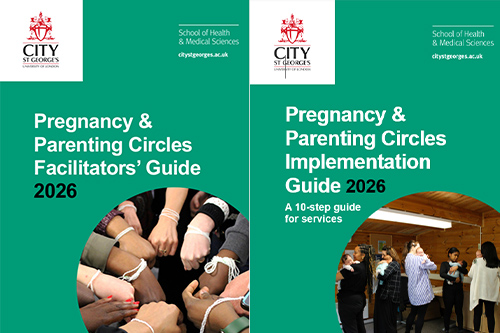
City St George's has carried out a range of studies on the group care model and is the UK centre for group facilitation training, including a Masters module. You can find out more about the overall programme here: Pregnancy and Parenting Circles
 The Research for Equitable Antenatal Care and Health (REACH) Pregnancy Circles study (2014-2024) is a NIHR funded randomised controlled trial of group antenatal care, and is the first to take place in the NHS. It explored whether group antenatal care can improve the outcomes and the wellbeing of mothers and babies.
 Lead: Professor Angela Harden and Professor Christine McCourt
For publications and additional information: REACH blog.
 Group Care in the first Thousand Days (GC_1000) (2020-2024) – City St George’s was a key partner in this international collaboration funded by EU Horizons 2000, exploring contextual factors which impacted the implementation of group antenatal and postnatal care in seven medium- and high-income countries.
 UK Lead: Christine McCourt
For more information: Group Care 1000
UK Lead: Octavia Wiseman
Publication currently under review
The NIHR funded SNAP2 programme, focused on self-management of blood pressure postnatally for women with high blood pressure. It followed the BUMP programme, which is now also completed. This project is led by GP Professor McManus in the Nuffield Department of Primary Healthcare Sciences and Professsor McCourt is a co-investigator.
Cherish was a programme development project funded by the NIHR to do the early work needed to co-design a personalised support package for improving outcomes for women and birthing people aiming for a spontaneous labour and birth. The Cherish team was made up of service-users, maternity improvement campaigners, midwives, obstetricians, statistician, and maternal health researchers and was led by Dr Mandie Scamell.
This evaluation project was commissioned by NHS England to provide a rapid independent evaluation of the implementation of this national maternity service priority. Led by Dr Ellinor Olander and Professor Christine McCourt, the team conducted a national online survey of implementation leads and follow-up interviews with a sample, plus three rapid-enquiry case studies of maternity services with differing experiences of implementation.
The report can be downloaded here: Report identifies range of challenges with implementation of Midwifery Continuity of Carer
Euro-Peristat is a collaboration between the 27 members of the European Union plus Iceland, Switzerland, Norway and the United Kingdom. Although these countries share similar standards of living and health care, they vary considerably in their health policies and healthcare practices. Comparisons between them are therefore useful for raising questions about the implications of these differences. The project is coordinated by Jennifer Zeitlin of INSERM in Paris. Professor Alison Macfarlane is responsible for liaising between the countries of the UK. For more information visit: europeristat.com
This study looked at variations in the outcome of pregnancy by time of day, day of the week and season. It was funded by ESRC's Secondary Data Analysis Initiative and built on previous research which investigated the timing of births in England and Wales from 2005 to 2014. It linked administrative data about births linked to deaths in England and Wales in these years to hospital data about the care given at birth and data about subsequent admissions of mothers and babies to hospital.
The study first investigated whether there was a "weekend effect" in neonatal mortality from anoxia, asphyxia or trauma - causes of death theoretically linked to availability of specialist care that might be less present at night or at the weekend. For almost all pregnancies (98%) there was no greater risk of neonatal death at night or at the weekend. There were higher odds of neonatal death from AAT at night compared to during a weekday for a vulnerable subset of babies: those born by emergency caesarean without the mother having been in labour. Higher odds in such emergencies translated to a small absolute difference in mortality risk.
Link to paper: Neonatal mortality in NHS maternity units by timing and mode of birth: a retrospective linked cohort study | BMJ Open
This programme has also conducted an assessment of the potential to use linked routine data for adjusted epidemiology of maternal deaths associated with registered births or stillbirths. This compared numbers of deaths ascertained through routine records to the numbers reported by the confidential enquiries.
A final output, adjusted analysis of maternal mortality risk by ethnicity and other characteristics, is currently in progress. For more information contact: Christopher.grollman@citystgeorges.ac.uk
The CHOICE Study was a NIHR-funded research project, led by the University of Edinburgh, investigating the safety, effectiveness, cost-effectiveness and acceptability of home cervical ripening during induction of labour (IOL). The process evaluation (qCHOICE) explored contextual influences on implementation of cervical ripening protocols and outcomes, women’s experiences of IOL and acceptability of home cervical ripening to women, their families, and other key stakeholders. For more information including publications contact: Cassandra.yuill.2@citystgeorges.ac.uk
This NIHR-funded study of the feasibility and implications of conducting full-scale randomised controlled trial of an innovative method of induction of labour. Women who were booked for induction are randomised to receive either a prostaglandin pessary or a trans-cervical balloon catheter to start the induction of labour process.
The aim was to compare how well these methods of labour induction work, which is the safest and least expensive method, and which is more acceptable to and favoured by women.
For more information, contact Rose.meades@citystgeorges.ac.uk
The rationale for this study derived from the reported low percentage of women having their babies in midwifery units (MU) despite the good evidence that suggests for women with uncomplicated pregnancies, having a baby in a MU results in better outcomes and is cheaper in comparison to having a baby on a traditional labour ward. Therefore, this study aimed to explore factors influencing the utilisation of midwifery units (MU) in England.
Find out more here: Midwifery Units Project - The University of Nottingham
The aim of this project was to enhance collaboration amongst healthcare professionals delivering care for women and their families during and after pregnancy.
Find out more here: The Collaborating in Pregnancy and Early Years (COPE) Project
The current way of obtaining consent for this procedure, which is commonly done awake, is outdated. It can leave patients disempowered, worried, confused and with wrong expectations. Legal specialists in the field of gynaecology have suggested the use of consent aids co-developed with users. Dr Liza Ball and Dr Rose Meades received funding from Barts Charity to develop a video as a consent aid for outpatient hysteroscopy. A virtual workshop was organised and a video produced called ‘Awake Hysteroscopy – is it the right choice for me?’ was produced.
Research group lead: Professor Susan Ayers
Our research focuses on the mental health and psychological wellbeing of mothers, their partners and children. Our work has three key areas: perinatal mental health risk and resilience, including in high-risk groups; assessment of perinatal mental health; and innovations in the delivery of perinatal mental health care and treatment.
This multidisciplinary group works on projects ranging from international studies of birth trauma and perinatal mental health to national studies of perinatal anxiety assessment and cost to UK healthcare. Current and recent research includes perinatal mental health in women in low- and middle-income countries; assessment of birth trauma and post-traumatic stress; evaluations of innovative interventions for perinatal mental health such as peer support interventions and development of local services.
We have established links with NHS Trusts and user-representative organisations in the UK, as well as international links with researchers in Europe, America, and Australasia. This includes the INTERSECT Study Consortium with representation from over 50 countries, which is run by members of this group.
The INTERSECT study examines childbirth-related PTSD in an international context by collaborating with researchers in over 40 countries. The study is led by a team of researchers at City St George’s, University of London (Professor Susan Ayers, Dr Rebecca Webb, Dr Georgina Constantinou & Dr Grace Lucas) & the Academic College of Tel Aviv, Israel. The study surveys women 6-12 weeks postpartum to collect cross-cultural information on the prevalence of postpartum PTSD, as well as cross-cultural variation in the causes and presentation of childbirth-related PTSD worldwide. The survey includes self-reported information on birth experiences, whether birth was traumatic, childbirth-related PTSD, depression, trauma history, obstetric and demographic information. The study is publicly registered here and the protocol available here. The first INTERSECT dataset was released in 2024 and includes data from 31 countries with 11,302 women. The dataset is available on application via the UK Data Service. The second INTERSECT dataset will be released in 2026 and will include data from over 40 countries. The results from the analysis of the 2024 dataset have been submitted for publication.
In addition, INTERSECT Africa is a network of researchers working in African countries who have conducted the INTERSECT survey in their country or are potentially interested in doing so. This network was funded by the Academy of Medical Sciences and provides an opportunity for researchers, clinicians and policy makers to get involved in international collaboration, support with grant applications, and mentoring for career development.
INTERSECT-TRACE is a biomarker study embedded within the INTERSECT project, aiming to explore how childbirth-related stress is reflected in biological markers of chronic stress. By measuring hair cortisol concentrations in women 6–12 weeks postpartum, this study will examine patterns of stress exposure from late pregnancy to postpartum. This cross-national study will contribute to a more comprehensive understanding of postpartum mental health by integrating psychological and biological perspectives, and supporting the development of integrated, biopsychosocial models of postpartum mental health.
Find out more here: International Survey Of Childbirth-related Trauma | Intersect Study
This project is led by researchers at City St George's, University of London (Dr Rebecca Webb & Dr Georgina Constantinou) in collaboration with bereavement midwives at Barts Health NHS trust. The aim of this research is to improve the perinatal loss care pathway for Bart’s Health with a focus on psychological support. The care pathway will be co-designed with bereaved parents and health professionals from Barts Health and related organisations, to ensure recommendations serve the local population. The study will contribute to the understanding of how the current care pathway can be improved to better support families. The Orchid Study is funded by Barts Charity, and will run from September 2025 to February 2027.
This collaboration with colleagues in Brazil looks at women’s perinatal mental health as part of the Birth in Brazil II Study of 20,000 women giving birth in Brazil. This study will help better understand risk factors, birth factors, and symptoms of depression, anxiety and PTSD in Brazilian women. This collaboration combines City St George’s expertise on perinatal mental health assessment, birth trauma, models of care and associated outcomes, with Brazilian expertise in perinatal epidemiology, evaluation and surveillance of public health interventions. It will improve understanding of perinatal mental health issues affecting women in Brazil and facilitate recognition and treatment of perinatal mental health problems.
Newton Links funding was obtained to extend the planned national survey to enable analysis of perinatal outcomes in relation to a range of factors in partnership with Fio Cruz research institute in Brazil. The extension also includes analysis by birth setting, with additional support from GCRF funds. The study was due to commence in March 2020 but was postponed because of the COVID pandemic, although an initial planning workshop was completed. The Birth in Brazil study data collection has now been completed and collaborative workshops between City St George’s and the Federal University of Rio de Janeiro are taking place in 2025 and 2026 to work on analysis and dissemination of results. The UK team includes Professor Susan Ayers, Professor Christine McCourt and Dr Rose Meades.
The GBS3 Trial is a randomised controlled trial of testing for Group B Streptococcus (GBS) in pregnancy or intrapartum led by Nottingham Clinical Trials Unit. It was funded by the NIHR HTA. This trial is looking at whether testing pregnant women for GBS reduces the risk of infection in newborn babies compared to the current strategy in place in the UK. The current strategy in the UK is to offer antibiotics during labour to women who are considered at raised risk of their baby developing a group B Strep infection. A qualitative sub-study embedded in this trial has been carried out by researchers at City St George’s, University of London overseen by Professor Susan Ayers and conducted by Dr Georgina Constantinou in collaboration with the team at Nottingham. Prior to the sub-study a pre-qualitative study was carried out to understand both women’s knowledge and attitudes towards GBS testing and the acceptability of implementing testing to inform the next study, these findings were published in BMC Pregnancy and Childbirth & Midwifery.
The aim of the main qualitative sub-study was to determine the acceptability of different methods of routine testing for GBS colonisation to pregnant women and health care professionals (HCPs), and to examine barriers and facilitators to their implementation. Interviews were carried out with women and health professionals in each of the four NHS Maternity units sites participating in the trial. The qualitative study is now complete and findings have been published in Women and Birth.
This project, funded by the NIHR, is working to evaluate a music-based programme co-developed with pregnant women and local women’s groups in The Gambia. Over six weekly sessions, women sing familiar songs with adapted lyrics about maternal health, building social support, lifting mood, and promoting wellbeing. A feasibility trial showed positive effects on maternal mental health, providing the foundation for expansion.
In this current project, we are testing CHIME’s effectiveness and cost-effectiveness in The Gambia through a full randomised control trial. We plan to adapt and evaluate it in an urban South African setting, and explore its potential in Lesotho, where music is culturally central but health promotion strategies are limited. Impact will be assessed through maternal mental health, well-being, and functioning, alongside routine clinic and infant outcomes. Working with communities, women with lived experience, and stakeholders, we aim to establish CHIME as a scalable, sustainable approach that improves maternal mental health and empowers women through culturally rooted practice.
Find out more here: Home - CHIME
The Music and Parental Wellbeing Alliance aims to enable, sustain, and expand an international and interdisciplinary community that works towards ensuring that all parents have the opportunity – and are empowered and equipped – to engage with music that can support their wellbeing.
Our Alliance grew from the AHRC-funded Music and Parental Wellbeing Research Network (2023-25). Through our collaborative work, we set the vision for our alliance: to enable, sustain, and expand an international and interdisciplinary community that works towards ensuring that all parents have the opportunity – and are empowered and equipped – to engage with music that can support their wellbeing.
Find out more here: Music and Parental Wellbeing Alliance
You can join using the link here: https://musicandparentalwellbeing.org/members-2/register/
As part of a NIHR funded doctoral clinical academic fellowship, Kyla Vaillancourt is conducting research to inform the implementation of observational measures of parent-infant interaction in specialist perinatal mental health services. The research aims to generate evidence about how to make an observational measure feasible and acceptable to implement in perinatal services and will result in recommendations for services to guide clinical care. This research is supported by a Clinical Advisory Group and Patient and Public Involvement Group. The first stage of the study testing the reliability and validity of a briefer and digital version of the NICHD parent-infant interaction scales is complete and is being written up for publication. Recruitment is ongoing for the next stage of the study.
This doctoral research explores how maternity care systems influence women’s experiences of childbirth and the development of post-traumatic stress disorder (PTSD) after birth. Funded by the British Medical Association’s Pushpa Chopra Award, this 3-year PhD is undertaken by Scarlett Spratt and supervised by Prof Susan Ayers and Dr Rebecca Webb at City St George's, University of London. The research forms part of the international INTERSECT study, outlined above. Scarlett is currently conducting a systematic literature review to identify and evaluate existing approaches to categorising maternity care systems globally. This will inform the development of a novel classification tool that will be used to link maternity system characteristics with women's birth experiences and PTSD outcomes in low-, middle- and high-income countries. The research aims to generate evidence that can inform the design of trauma-informed, equitable maternity care systems worldwide.
This is a mixed methods PhD study exploring Factors Associated with Postpartum Mental Health Difficulties among Women in Saudi Arabia, including factors such as social norms, family support, birthing practices/experiences, and clinical conditions. The project is being conducted at City St George's, University of London under the supervision of Prof Susan Ayers and Dr Rebecca Webb at City St George's, University of London and Dr Haya Zedan (external).
Taghreed Alsubaie has completed a systematic review of eighteen studies examining how cultural practices such as Nefas (the 40-day postpartum rest period), family expectations, clinical factors (e.g., delivery type, fatigue), and self-efficacy shape postpartum mental health outcomes in Saudi Arabia. The review highlights the need for culturally sensitive approaches in maternal care and informs the next phases of the project. The next stages will include secondary analysis of national survey data (INTERSECT study) and qualitative interviews with postpartum women in Saudi Arabia to explore their lived experiences and barriers to accessing mental health support.
This study identified the most effective, acceptable and feasible method for assessing anxiety in women during pregnancy and after birth. This was achieved through a series of qualitative and quantitative studies comparing 4 different tools for assessing anxiety: 2 anxiety-specific measures and 2 mental health measures selected on the basis of research and clinical evidence that suggest they may be effective. The first study (MAP) recruited over 2,000 women in England and Scotland and followed them up in early pregnancy, mid-pregnancy, late-pregnancy and 6-weeks postpartum. The MAP ALLIANCE study was then funded to follow these women up 6 months, 12 months and 2 years after birth to look at access to treatment and support for perinatal anxiety, as well as the cost of perinatal anxiety to the NHS and society. The study was partly conducted during COVID so findings have contributed to our understanding of perinatal anxiety, the effect of COVID on anxiety, the cost to services, and how best to screen for perinatal anxiety. The identified screening tool has been trialled in NHS services an implementation guide developed for services who wish to use this tool.
This study aims to identify the most effective, acceptable and feasible method for assessing anxiety in women during pregnancy and after birth. This will be achieved through 3 work packages (WP) that compare 4 different tools for assessing anxiety: 2 anxiety-specific measures and 2 mental health measures (GAD-7, SAAS, CORE-10, Whooley questions) selected on the basis of research and clinical evidence that suggest they may be effective. It will be conducted in NHS services in England and Scotland.
WP1 has been completed and currently finishing up analysis and writing up paper. WP2 recruitment was delayed due to COVID-19 however should be starting up in October 2020.
Find out more here: Home | MAP Study | MAP Alliance and here: MAP Alliance | MAP Study
The MATRIx study was led by researchers at City St George's, University of London in collaboration with experts across the UK. MATRIx reviewed the research evidence on what prevents women who are pregnant or after birth from getting support and treatment they need if they are struggling with emotional or psychological problems. On the basis of these reviews we developed recommendations for healthcare services about how to tackle these barriers to make sure women and families get the help they need. The project involved experts and stakeholders from many different backgrounds and disciplines. The project is now complete and two MATRIx conceptual frameworks were developed that highlight the importance of 66 barriers and 39 facilitators to perinatal mental healthcare at multiple levels that intersect across the care pathway. These conceptual frameworks informed the development of evidence-based recommendations on how to address barriers to ensure that all women are able to access the care and support they need. Recommendations were made for health policy, practice and research. Review 1 & 2 can be accessed here: The Lancet Psychiatry & BMJ open. The conceptual framework can be found here: BJPsych Open & the full report can be accessed at Health and social care delivery research.
Following on from this work, the MATRIx2 study was funded by NIHR ARC North Thames to co-design a culturally sensitive care pathway for perinatal mental health care in East London. This study formed two local PPIE groups of women who self-identify as experiencing PMH difficulties and health professionals working in East London to co-create this pathway, ensuring the new pathway is sensitive to women’s religious and cultural needs. The study is led by Dr Rebecca Webb and conducted by Dr Georgina Constantinou & Dr Una Hutton. Initial interviews were used to outline barriers experienced by members of the groups and stakeholder sessions were used to develop improvements to the pathway and create outputs for women and services.
Find out more here: Home | MATRIx
Elizabeth Dudeney’s PhD research programme exploredacceptable, appropriate, and clinically relevant approaches for identifying and discussing suicidality with pregnant and postnatal women in the context of maternity care. Using a mixed-methods design, one systematic review and three empirical studies were conducted (two qualitative studies with perinatal women and maternity healthcare practitioners, and one Delphi study with experts in relevant fields). Findings indicated that there was limited psychometric evidence for the reliability and validity of suicidality measures that have been used with perinatal women, and many suicide-related screenings were unacceptable to perinatal women and healthcare practitioners in their current form. New and adapted suicidality items that reached group consensus using the Delphi method can provide a preliminary basis for the development of perinatal specific measures.
This thesis was submitted July 2025 and is awaiting examination and to date. Five academic papers have been published in high impact open access peer-reviewed journals (Journal of Affective Disorders, Frontiers in Psychiatry, Women and Birth, Midwifery & The Archives of Suicide Research). This research is currently informing the development of an eLearning programme on perinatal suicide prevention which will be delivered by Grassroots Suicide Prevention, a leading UK charity in this field. The training is aimed at a wide range of professionals who work with perinatal women including midwives, health visitors, GPs, social workers, and voluntary sector providers.
Research group lead: Dr Marina Daniele
Our research focuses on population health, preventive action and health care for women and children including socially and economically marginalised groups, including issues of equity of access to and quality of care. We aim to describe inequalities in maternal and child health outcomes to inform public health policies and improve services for women, children and their families. Research includes young teenage parenting, mothering and feeding children with neurodisability, maternal and child health in relation to HIV/AIDS, and the health of homeless and migrant populations, obesity in pregnancy and in children, sickle cell and female genital mutilation. We are currently working on projects ranging from locally focussed studies in East London to national studies, such as on prevalence of FGM and the timing of birth and its outcome by time of day and day of the week and international comparisons of perinatal indicators. We use a range of methodological approaches including quantitative and qualitative methods and linkage and secondary analysis of national and linked datasets.
We have well established links with Barts Health NHS Trust, Homerton University Hospital NHS Trust and public health departments in East London as well as with the Department of Health, Home Office, the Office for National Statistics and non-governmental organisations such as Maternity Action and the NCT and international networks such as ROAM (Reproductive Outcomes and Migration) and Euro-Peristat. Our work has informed the development of maternal and child healthcare services and policy in England and internationally
This is a Horizon 2020 project funded by the European Commission to develop a systematic and in-depth understanding of acceptable, feasible and sustainable strategies to integrate group care into health systems for antenatal and postnatal care during the first 1000 days. Group care is evidence-based, transforms the delivery of maternal, new-born and child health care and reduces inequities in services utilization, improves the quality of services, and can make a positive impact on the health and wellbeing of mothers, families and children. It involves demonstration sites in 4 LMICs (Ghana, Suriname, South Africa, Kosovo), and 3 high-income countries (The Netherlands, Belgium, England) in settings that serve the most vulnerable women and girls. City is leading Work Package 5 on evaluation of the programme and has worked with two NHS maternity services to implement and evaluate innovative models of group care. In one setting, this is being combined with midwifery caseloading to enhance continuity and social support throughout the maternity period and in the other, midwives, health visitors and nursery nurses are collaborating across service boundaries to provide an integrated antenatal to postnatal model called Parenting Circles. This work builds on the work of the REACH Programme and the Pregnancy Circles trial (see Models of Care projects).
The study started in January 2020 but experienced delays and adaptations needed because of travel and social distancing restrictions affecting the care model. Evaluation data are currently being analysed with the aim of developing country implementation blueprints and an international implementation toolkit, to be published in 2024.
Midwife-Led Birth Settings (MLBS) available in the UK include homebirth services, alongside and freestanding birth centres. MLBS are associated with better clinical outcomes, better breastfeeding rates, lower risks of medium and long term morbidities, and high rates of experience satisfaction. However, existing evidence suggests that racialised women are less likely to access these services. The AMBeR Project aims to understand barriers and facilitators that impact access to MLBS for racialised individuals in the UK.
The study consists of five workstreams:
1. Scoping review: “Exploring existing literature around barriers, facilitators, and interventions related to accessibility of MLBS to racialised people in the UK”. Findings will be published soon. For further details, please see here the published scoping review.
2. Surveys of UK midwives: We are conducting a survey via the UK Midwifery Study System (UKMidSS) network of midwifery units to identify current or past strategies, initiatives and interventions designed to increase the accessibility of birth centres. Another survey related to homebirth services is being planned in collaboration with the Royal College of Midwives (RCM).
3. Qualitative interviews with midwives: Interviews with a sub-sample of survey respondents and key informants will be conducted to obtain further detail on reported interventions and explore perceptions of the barriers and opportunities in terms of accessibility of services to racialised service users.
4. Last but not least, we conducted a knowledge exchange event in July 2024 to share our findings with community members, birth workers and advocates.

This was an observational feasibility study with a nested qualitative study to assess whether it is feasible and acceptable to screen an at-risk migrant population for LTBI at routine antenatal booking visits in secondary care, using opt-out IGRA testing. Secondly, to develop a definitive large-scale cluster RCT to evaluate the effectiveness of acceptable interventions to maximise migrant screening for LTBI in pregnancy and to increase uptake of treatment postpartum. Pregnant migrants from high TB-incidence countries will be recruited, collecting data using interviews and focus groups of migrants and LTBI knowledge questionnaires.
This study has now been completed and reports are in submission. The protocol was published here:
This is a qualitative study involving interviews with healthcare professionals to understand their experiences of working with young mothers. Furthermore, with young mothers to understand their experiences in eating and moving during and after pregnancy.
This a co-design study, involving 3 groups of people – carers, healthcare professionals and young people, looking at different interventions of sickle cell anaemia. The aim is to develop an intervention to enhance and improve health care provision of sickle cell anaemia.
The general objective is to understand the relationship between medical teams in maternity services and people (users) with a non-western cosmology. The project will illuminate this issue through cross- cultural comparison. In the Brazilian context the focus is on the encounters of indigenous women with health services, while in the UK the focus will be on those of refugees and recent immigrants. A same question will constitute the background of these two studies: how public health policies can account for the cultural diversity in a way that provide adequate care without disrespecting other world logics? The Brazilian part of the research will essentially consist in data analysis of an almost already completed fieldwork, while the UK part will give rise to rapid ethnographic case studies, supplemented by bibliographic and documentary data.
This study aims to improve the way that positive newborn screening results for conditions such as sickle cell disease and cystic fibrosis are communicated to parents by health professionals. With the expansion of newborn screening in England, the importance of delivering screening results appropriately to minimize any long-term negative health and psychological consequences is vital; this project aims to develop interventions to improve such communication. It involves four phases and as a part of the project, the researchers will work with parent representatives for each screened condition covered by newborn screening who will form an advisory group to assist the research team, provide feedback on each phase of the project and monitor its progress.
This project was paused between March and July 2020 and has now resumed properly from September 2020 and will be finishing in December 2020.
This study will evaluate child nursing student views and experiences on peer mentoring and understanding how to train them as peer mentors, in addition to assisting them in mentoring other colleagues as well.
This study involves interviewing young people, carers and parents of those diagnosed with sickle cell anaemia to assist in the development of an educational pack for student nurses. This pack should include all necessary information of what a student nurse should know in regards to this illness.
Research group lead: Professor Vasanti Jadva
The Reproduction and the Family (ReproFam) Research Group conducts internationally recognised research on assisted reproduction and family diversity across the life course. We explore the perspectives of families created through IVF, egg donation, sperm donation, surrogacy, and other forms of fertility treatments, as well as emerging family forms such as elective co‑parenting. A central aim is to examine the psychological health and experiences of parents, children, surrogates, and gamete donors, recognising the complex social, biological, and relational contexts in which these families live. We are also committed to understanding the unique experiences of LGBTQ+ individuals and families.
The group is recognised for its longitudinal studies, following families over many years to understand the long‑term psychological outcomes, family relationships, identity development, and disclosure practices. Findings inform policy and practice in the UK and abroad. We work closely with patients, families, practitioners, policymakers, and third‑sector organisations to ensure our research addresses real‑world questions and supports inclusive, evidence‑based practice. We collaborate on research projects with colleagues in Europe, North America, South America and Asia.
Email us at: Vasanti.jadva@citystgeorges.co.uk
Research Group Lead: Dr Susan Bradley
A developing strand of our work is addressing quality of MCH care globally, including in low and middle-income countries. This strand builds on a series of doctoral projects addressing subjects as diverse as HIV, female genital mutilation, health system stewardship, maternal health and respectful maternity care. Our work is now focused on the implementation of high quality and respectful care, goals that are now reflected in World Health Organisation policies and in the Sustainable Development Goals. We explore how structural factors and the organisation and models of care can influence maternal and child health and wellbeing, positively or negatively. We are focused on translation of international evidence on the value of midwife-led care in a range of contexts. Aspects of our work also bring lessons for improving maternal health and care from low-income countries to higher income settings like the UK, through community-based interventions and women’s groups – for example in models such as group care (see projects).
Recent support from the Global Challenge Research Fund has enabled us to:
We draw on critical realist approaches, post-colonial and de-colonising theories to provide a critical analysis of the forces influencing quality, safety and experience of care, including cultural safety. We also use implementation science theory to inform our thinking about how to implement change, but with a strong focus on social and structural approaches.
This is a Horizon 2020 project funded by the European Commission. It aims to develop a systematic and in-depth understanding of acceptable, feasible and sustainable strategies to integrate group care into health systems for antenatal and postnatal care during the first 1000 days. Group care is evidence-based, transforms the delivery of maternal, new-born and child health care and reduces inequities in services utilization, improves the quality of services, and can make a positive impact on the health and wellbeing of mothers, families and children. It will use demonstration sites in 4 LMICs (Ghana, Suriname, South Africa, Kosovo), and 3 high-income countries (The Netherlands, Belgium, UK) in settings that serve the most vulnerable women and girls, will deliver group antenatal and postnatal care throughout the project.
Specifically, GC_1000 will:
1. Implement group antenatal and postnatal care in selected demonstration sites in collaborative ways that set the groundwork for sustained service delivery and possibilities for scaling- up;
2. Analyse within country data that emerge from the implementation process to create country-specific blueprints for scale-up;
3. Use cross-country synthesis to develop a global implementation strategy toolbox for the adaptation, implementation and scale up of facilitated group care within the first 1000 days, particularly to reach the most vulnerable groups of women and girls globally.
This study started in January 2020. This study is experiencing some delays and adaptations needed because of travel and social distancing restrictions affecting the care model directly but there has been work on adaptations to the model and methods of initial data collection to compensate for this. City is leading Work Package 5 on evaluation of the programme.
This is an on-going research and development programme to test whether the introduction of midwifery units (MUs), staffed by dedicated midwives, can improve the birth environment and experience of care for women and midwives in low- and middle-income countries (LMIC). IMaGINE focuses on the potential of midwifery-led care and services to address the complex, multi-faceted problems of widespread disrespect and abuse during birth, lack of evidence-based practice, and women’s reluctance to engage with facility-based birth. While we have robust evidence from high-income countries on the benefits of midwife-led care models (for women and midwives), such evidence is lacking from resource-constrained contexts. The initial stages of our programme were supported by Global Challenge Research Funding. This enabled us to establish a network of actors from Malawi, Sudan, Brazil and India and to work together to carry out a systematic review/ meta-synthesis of current evidence on the impact of midwifery units in LMICs. We have also undertaken key stakeholder workshops and situational analyses in three of the four partner countries. Future plans involve identifying pilot project sites to carry out implementation and evaluation of MUs in these contexts.
The project has progressed, with planned work completed in Brazil, Malawi and Sudan and but the work in India had had to be postponed because of the lockdowns and travel restrictions.
This is an ethnographic study, exploring the complexity of social processes on decision-making related to the universe of meanings, reasons, beliefs, values and attitudes that influence women’s birthplace choice.
This project involves collaboration with colleagues at the Oswaldo Cruz Foundation (Fiocruz) in Brazil. It is forms part of a wider study to look at women’s perinatal mental health as part of the Birth in Brazil II Study of 20,000 women giving birth in Brazil. This study, funded by the Newton Fund, will help better understand risk factors, birth and care factors, and symptoms of depression, anxiety and PTSD in Brazilian women. The Birthplace in Brazil study, funded by the Grand Challenges Research Fund enables us to look specifically at outcomes of births planned in freestanding midwifery units in Brazil. Development of midwifery units (Centros de Parto Normal) formed a key part of the maternity reform policy in Brazil, to improve outcomes and experiences of care and reduce the excessive rates of intervention. However, only a small number have been implemented to date and these are mainly concentrated in a few cities. This study will help to provide evidence which should increase confidence in implementation across Brazil.
Researchers at City: Dr Nathalie Leister, Dr. Rose Coates, Dr. Louise Williams, Prof. Christine McCourt, Prof. Susan Ayers
Partners: Friocruz, Brazil
City, University of London has formed a partnership with a Brazilian institution. This project is exploring maternity care in Brazil including a national survey of obstetric units, midwifery units and surveying over 20000 women.
This study explored midwives’ perspectives on the practice, impact and challenges of delivering respectful maternity care in Malawi, highlighting the considerable challenges facing staff in this context. Prior to this, much of the research had focussed on women’s experiences. This work aimed to include the voice of the midwife.
Two systematic reviews were conducted to understand the broader drivers of disrespectful care during birth in sub-Saharan Africa. One explored women’s experiences; the second focussed on midwives perspectives.
This study aims to show the optimum maternal and perinatal outcomes in Midwifery Units, explore the reasons for why majority of women with uncomplicated pregnancies give birth in obstetric units when there is no clinical indication and the reasons behind choosing this environment against the evidences on places of birth.
Research Group Lead: Dr Lucia Rocca-Ihenacho
The Midwifery Units (MU) Standards were developed by a team led by Dr Rocca-Ihenacho as part of her NIHR Knowledge Mobilisation Fellowship, thus being translational. The aim of the standards was to support the implementationof the evidence produced by our prior research on place of birth and particularly to support maternity units planning to open new MUs or improving existing ones.
The MU Standards were launched during the second MUNet Conference at City in July 2018 and we now want to develop indicators and an assessment tool in order to further develop impact. The Standards document includes 27 standards under 10 themes that capture the evidence base, translating it into more practical guidance. At present the Standards do not include indicators for users to benchmark where their service is in relation to the Standards or any improvements achieved. The number of indicators is expected to be approximately 50.
We propose to create indicators and a self-assessment tool for users to assess their own services against each of the published Standards. This can also hold future income generating opportunities for MUNet in terms of creating an accreditation system.
The aim of this study is to develop and evaluate a theoretically informed knowledge implementation pathway that service providers and commissioners can use as a guide to implement evidence on birthplace into NHS services which require complex organisational and professional practice change.
This study has been completed and is in the analysis stage.
Barkantine report
Find out more here: NICE Birthplace Action
As the Research for Equitable Antenatal Care and Health (REACH) Pregnancy Circles trial was drawing to a close in 2020, a team of researchers from the Centre for Maternal and Infant Health Research at City were granted funding for a small study exploring how this innovative model of group antenatal care might be rolled as part of normal NHS maternity care.
In order to better understand midwives’ lived experience of facilitating gANC within the NHS, it was felt that practising midwives should be involved not only as participants, but as partners in the study design, data collection and analysis alongside the research team. A co-production framework was employed, adapted from Henshall et al (2018) and three midwives from different Trusts who had facilitated Pregnancy Circles were recruited to collaborate. The midwives contributed to the topic guide and took the lead in facilitating the online focus group discussion with their peers. Different aspects of the data were then analysed by each member of the team, with findings summarised and discussed together. The partnership has proved to be a rich source of discussion and insight, balancing theoretical insight with practical realities.
Findings are currently being written up for a journal article.

Professor Susan Ayers
Our Maternal Health PhD/MPhil programme enables you to develop new research in collaboration with expert international researchers and professional and community stakeholders. Close links with our health service and policy partners help to rapidly transform your research into policy, practice and education.
The Global Maternal Health MSc is a flexible programme designed to develop your leadership skills with a particular focus on international aspects of childbirth and maternal health, including development and scaling up of midwifery to improve quality, accessibility, and safety of maternity care globally.
This midwifery degree prepares you for a challenging and rewarding career as a midwife, supporting women through pregnancy and childbirth. You’ll learn through a combination of academic study and professional placements in London’s leading healthcare trusts. After completing this degree, you’ll be qualified to practise as a midwife here and abroad.

Professor Christine McCourt
The Centre hosts research seminars regularly as part of the School of Health and Medical Sciences’ weekly research seminar programme. All are welcome to attend but it is essential to contact the organiser beforehand for room and catering planning and in case of any late changes or cancellation. We will aim to make presentations or podcasts available on the website where possible.
Check back for details of future events.


Part 1:
Part 2:


The Society for Reproductive and Infant Psychology (SRIP) is an international organisation bringing together research on psychological, socio-cultural and political aspects of reproduction, birth and infancy. The Society raises awareness of psychological, social and political aspects of reproductive and infant health through scientific conferences and workshops, our journal The Journal of Reproductive & Infant Psychology, and liaising with professional bodies and the public.
Our annual conferences provides the means to exchange research findings, develop research interests, develop research networks and engage with clinical and academic partners.
At the conference, Dr Lucia Rocca-Ihenacho and colleagues launched the Midwifery Unit Standards developed as part of an NIHR post-doctoral fellowship at City, University of London. The Standards have been developed over an 18 month period by a team of researchers with input from a broad range of stakeholders across the UK and mainland Europe, RCM, EMA and delegates at the 2017 ICM conference.
They celebrated Birth Centre Beacon Sites and certificates were presented by Kathryn Gutteridge, President of the Royal College of Midwives.
Leading midwives and policymakers from all four countries of the UK presented on making services more responsive to women's and babies' needs, more family-friendly, and unlocking the potential of birth centres.
Sessions:
This conference aimed to share research and experiences related to positive birth. Featuring a number of high profile speakers and guests from the area, the day shared some of the latest research from the discipline as well as service users’ experiences in order to explore the concepts of positive birth and informed choice. The event was organised by Judith Flood, a midwifery lecturer in the School of Health and Medical Sciences at City.
Student nurses and midwives showing strength in support of NHS
Recommendations for how midwifery units can support the NHS during COVID-19 crisis
Improved access to Midwifery Units is urgently needed
How do we best measure the effect of PTSD on women following traumatic childbirth?
City pregnancy programme shortlisted for Royal College of Midwives innovation award
In collaboration with the Royal College of Midwives, the Midwifery Unit Network offers support to those wishing to develop midwifery units (birth centres), and to already established midwifery units. The network acts as a hub to share good practice and information resources, and be a community of practice with a shared philosophy essential to offer consistent, excellent and safe care for women and their families.
The aim of the Midwifery Unit Network is to maximise potential for a positive childbirth experience, and to enhance the physical and psychological wellbeing of childbearing women and their babies, through the promotion and support of midwifery units (birth centres).
We have a range of questionnaires and research tools that are freely available to download or use on request. These include:
City Infant Faces is a database of standardised photographs of baby faces showing different emotions. These have been categorised into positive, negative and neutral emotions and can be used in studies of the perception of infant emotions. The City Infant Faces database has been validated and is available on request for research use only (cityinfantfacedatabase@gmail.com).
The CityBiTS is a questionnaire measure of post-traumatic stress disorder (PTSD) after birth. This questionnaire measures symptoms and diagnosis of PTSD according to DSM-5 diagnostic criteria. It also includes items from DSM-4 that research suggests are discriminative when diagnosing postnatal PTSD. Find out more here: Home | City Birth Trauma Scale | UK
The CityMISS is a questionnaire measure of perceived stigma for mental illness in pregnancy and postpartum. It is available on request (susan.ayers.1@citystgeorges.ac.uk).
The SCIB measures control during birth and perceived support from health professionals. It has 3 subscales: support from healthcare professionals, perceived internal control, and perceived external control. Validated versions are available in English, German and Turkish:
SCIB – English version
SCIB – German version
SCIB – Turkish version
The P-BESS measures experiences and satisfaction with care during the birth of a preterm baby. It can be used with mothers and fathers. Validated versions are available to download in English.
P-BESS English version
The BirthMARQ measures women’s memories of birth and aspects of recall. It has 5 subscales of: (1) emotional memories, (2) centrality of memories to self, (3) coherence of memories, (4) reliving of memories and (5) recall of memories. Validated versions are available to download in English. Persian and Czech versions are currently being validated so will be available soon.
BirthMARQ